When subsidence affects a property, choosing the right repair method is critical. Homeowners in Dublin often hear about resin injection vs mini piled underpinning, but which is best? As independent engineers, we don’t sell or install systems. Our role is to assess ground conditions, compare options, and recommend solutions that ensure long-term stability and insurer acceptance.
What is the Difference Between Resin Injection and Mini Piled Underpinning?
Resin Injection Underpinning:
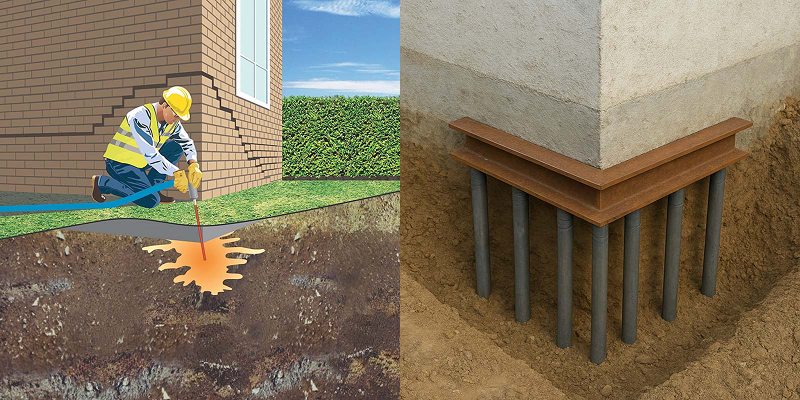
- Expanding resin pumped into soil to fill voids and stabilise foundations
- Quick, less disruptive, often cheaper upfront
- Less predictable in deep fill soils, peat, or water-bearing ground
- Guarantees often exclude groundwater and cross-boundary risks
Mini Piled Underpinning:
- Loads transferred to stable strata using small-diameter piles
- Proven method over decades
- Works in variable soils, including water-bearing ground
- Reliable long-term results with insurer recognition
| Feature | Resin Injection | Mini Piling |
|---|---|---|
| Track record | Newer, less long-term evidence | Proven, widely accepted by insurers |
| Ground conditions | Best in uniform, dry soils | Works in deep fill, variable soils, and water-bearing ground |
| Guarantees | Often exclude groundwater and cross-boundary issues | Typically robust and long-term |
| Disruption | Minimal, usually no moving out | Some site access needed, short-term inconvenience |
| Cost | Cheaper upfront, potential for reoccurrence | Higher upfront, reliable long-term |
| Independence | Often promoted by contractors | Recommended by independent engineers |
Why Mini Piling is Often Recommended
- Mechanical load path to stable ground
- Long approval track record with insurers
- Avoids uncertainty with soil variability or water presence
- Provides consistent, insurable results
Mini piling prioritises long-term stability and insurance compliance, making it the preferred solution in many Dublin properties.
Why Insurers Sometimes Prefer Resin Injection
- Cheaper upfront cost
- Works without homeowners moving out
- Suitable for uniform, dry soils
Cheaper doesn’t always mean better. Resin is less predictable where water is present, and many guarantees exclude groundwater-related issues.
Can Resin Injection Affect Drains or Neighbours?
- Expanding resin can spread into drains or adjacent soil
- Risk of damage to neighbouring properties
Independent assessment ensures this risk is minimised.
Is Mini Piled Underpinning Disruptive?
- Requires site access and short-term works
- Provides long-term structural solution
- High level of insurer recognition
Our Role as Independent Engineers
We don’t supply or install systems. Instead, we:
- Investigate ground conditions via trial pits, soil testing, and drainage surveys
- Advise on the best repair option for long-term stability
- Help navigate insurer requirements so claims stand on solid ground
Recommendations are based on engineering judgement, not commercial interest.
FAQs
What’s the main difference between resin injection and mini piling?
Resin injection fills soil voids quickly, while mini piling transfers loads to stable ground. Mini piling is generally more predictable and widely accepted by insurers.
Is resin injection always cheaper?
Upfront, yes, but it can lead to recurring issues in unsuitable soil conditions, potentially increasing costs long-term.
Does mini piling require homeowners to move out?
Usually not. Some short-term disruption may occur, but the works are controlled and manageable.
Why should I use independent engineers for advice?
Engineers provide unbiased recommendations based on site conditions, ensuring the chosen method is safe, effective, and insurer-approved.